Quick
Transformative
Experience
User Experience, User Interface & Conversion Optimisation for an Australian Health Insurance Provider
· UI/UX Design

The Challenge
The existing website underserved both the business and its users.
Navigation was unclear, the user journey to purchase was unnecessarily complex, and the overall experience didn't hold up against the standard set by major competitors.
Beyond the design problems, the engagement carried its own structural constraints. Budget was tight from the outset, which required careful prioritisation - identifying where design investment would have the most direct impact and sequencing the work accordingly.
Decision-making within the organisation was layered, meaning buy-in for each phase had to be earned, not assumed.

The Process
Research & Analysis
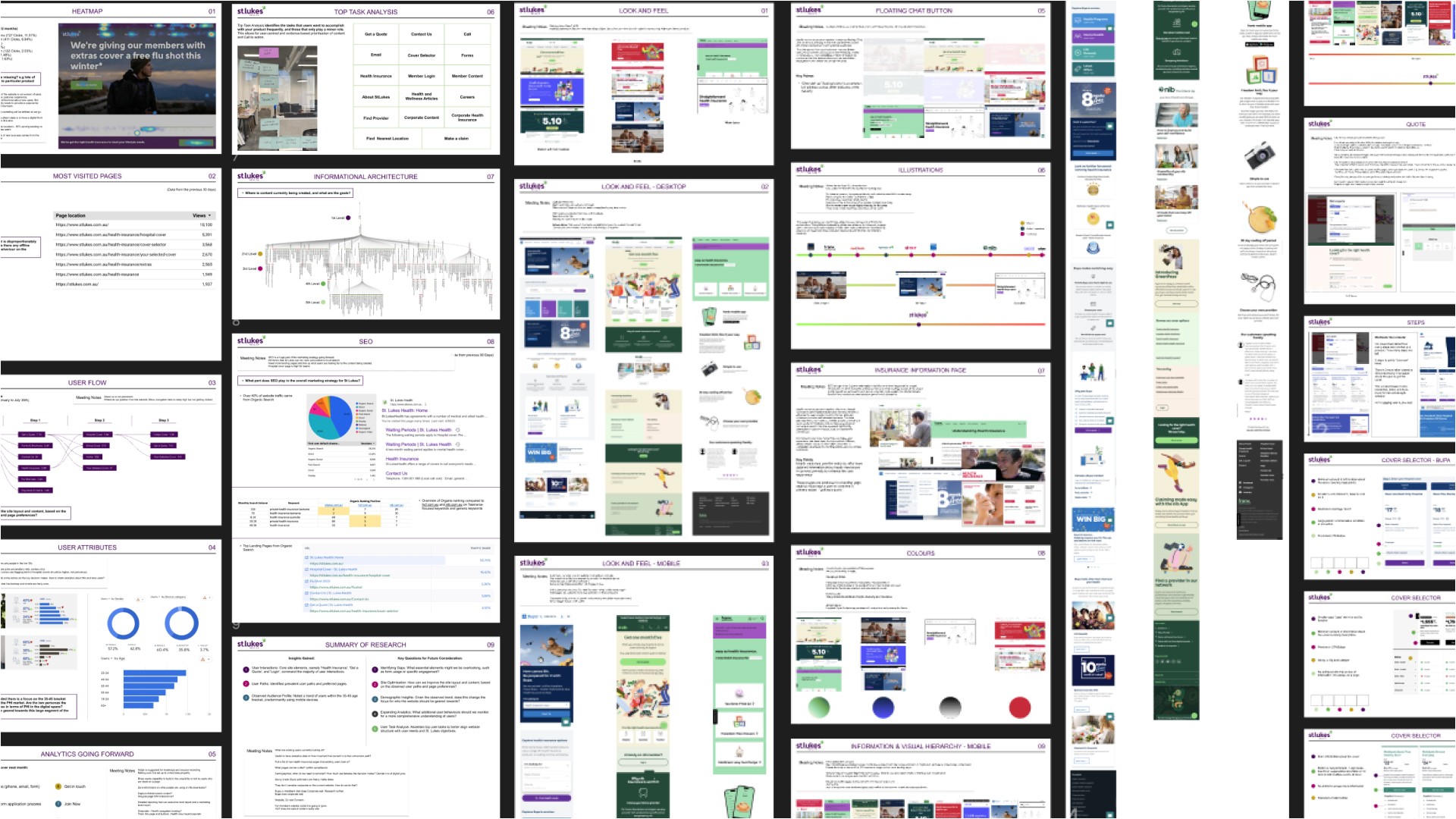
The process began with a structured UX research phase. The target demographic was defined — their needs, motivations, and the specific problems they face when navigating health insurance decisions. A competitive analysis followed, reviewing every major health insurance provider in Australia to identify whether a unified user flow existed across the market, and where the gaps were.
The existing website was then assessed through a heuristic evaluation — examining usability principles, missed opportunities, underdelivered jobs-to-be-done, navigation clarity, information hierarchy, and content effectiveness. The audit produced a clear picture of what wasn't working and why.
Customer Journey Mapping & Wireframing
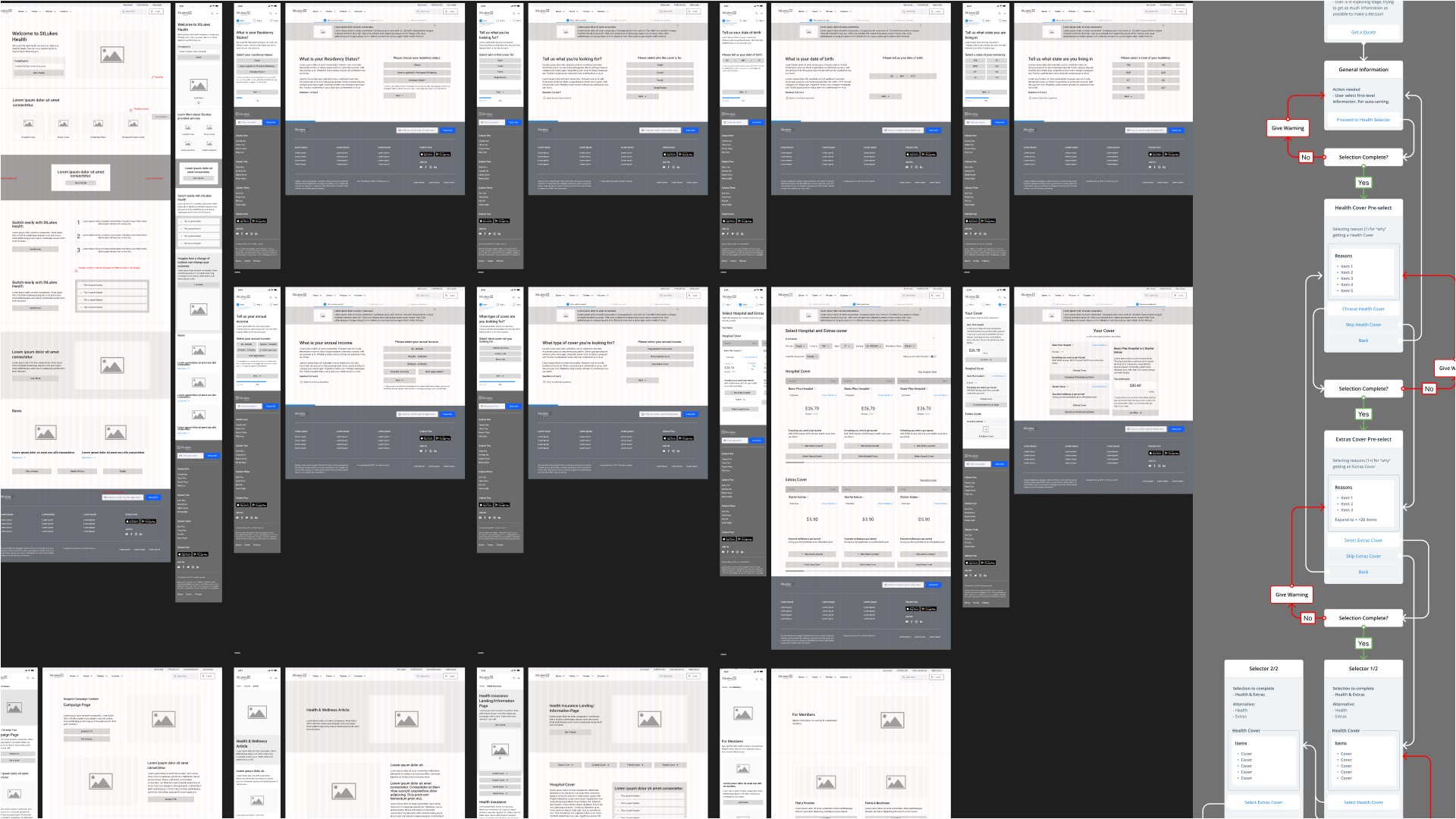
With the research consolidated, a customer journey map was developed to define exactly what the process of purchasing health insurance looks like from the user's perspective - touchpoints, decision points, friction, and drop-off risk. This became the foundation every subsequent design decision was tested against.
Wireframes were developed to establish how the site would be used by the core demographic - structure, flow, and interaction logic resolved before any visual design began. Concepts were tested and refined until the approach was validated and signed off.
Design & System
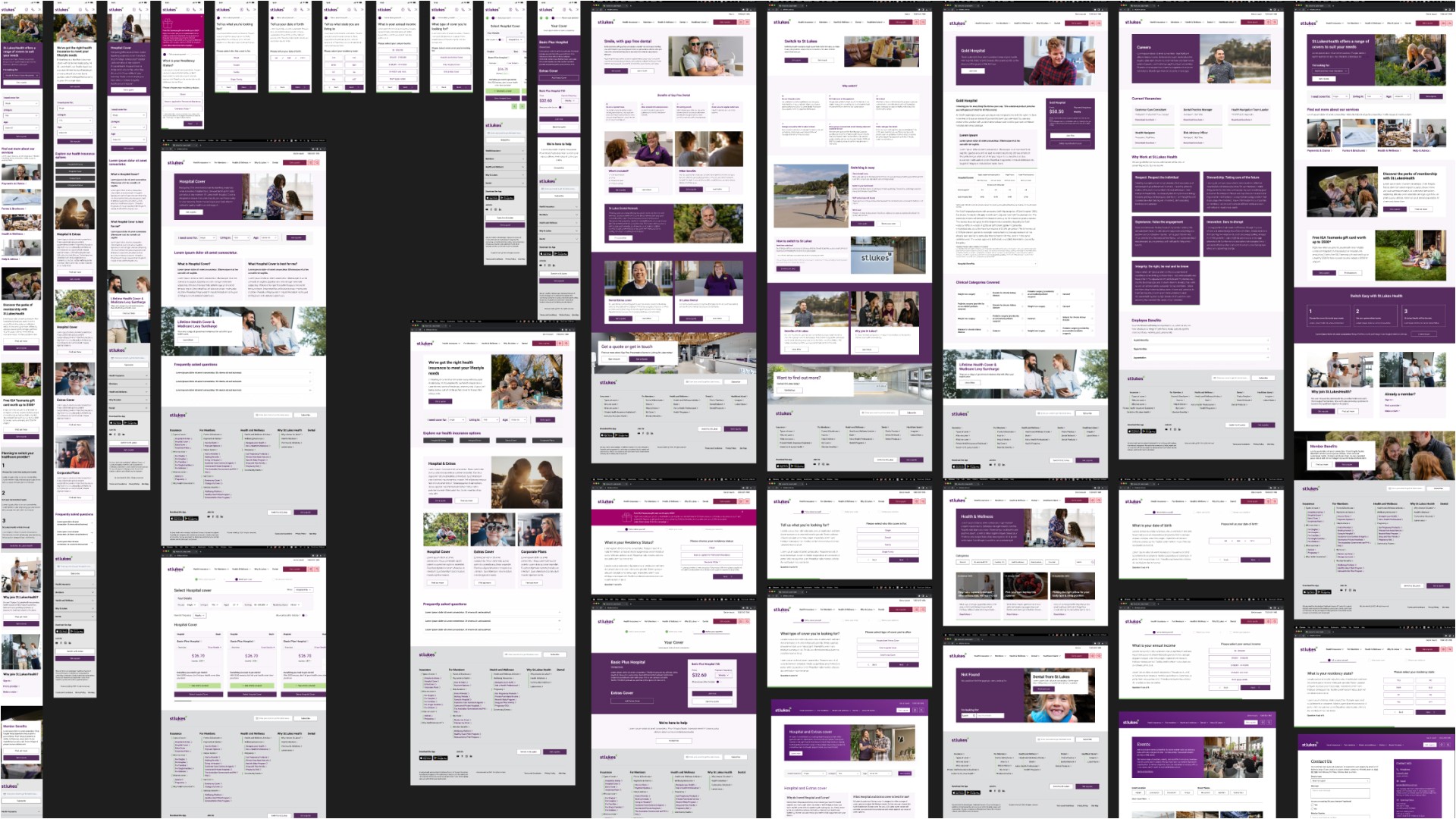
Given the time constraints and the nature of the brief, aesthetic ambition was deliberately set aside. The priority was function and conversion - every design decision was made in service of moving users through the journey with as little friction as possible.
Design effort was concentrated on the primary user journey screens alongside a selection of additional pages to establish content block patterns for content-heavy and marketing pages.
A UI system was built in parallel, unifying the design language and giving the development team the structure to build remaining pages consistently and efficiently.
Outcome
Monthly targets have been consistently and materially exceeded.
A research-grounded website that performs measurably better than what it replaced - built under real constraints, approved through a demanding stakeholder process, and continuously improved since launch.
St Lukes remains an active partner. The work continues.
Delivery Context
Delivered by a single designer, working within a tight budget and compressed timelines. Tasks were grouped and sequenced deliberately - identifying where design effort would have the most direct impact on conversion, and progressing steadily without losing momentum.
Stakeholder buy-in at each phase required as much preparation as the work itself; in a large, risk-averse organisation, earning approval is its own discipline. The constraints shaped the approach.