Red Parka
Mobile rage-quit rate dropped significantly. Online sales reached an all-time high, making digital the primary revenue driver for a business that had previously run mostly in-store. Campaign pages became on-brand and fast to assemble. A loyalty-driven retail brand didn't just move online — it built a storefront that could sustain and grow that shift.
2025
Services Provided
Web Design
E-commerce
UI/UX

The Challenge
Red Parka is an eco-friendly Tasmanian retail brand with a clear sense of purpose — donating 50% of profits to conservation and humanitarian causes. The brand had personality, position, and a loyal customer base. The website didn't reflect any of that, and more critically, it wasn't converting.
The business decision was significant: move from a roughly even split between in-store and online to mostly digital. That's not a redesign brief. It's a business transformation brief. The website needed to be capable of carrying that shift — which meant the gap between marketing-driven traffic and actual sales couldn't stay where it was.
We had been working with Red Parka for a number of years, which meant we already understood the audience and the brand in detail. That context shaped how the project ran.

Research & Analysis
Rather than starting from broad discovery, the existing relationship meant we could move directly to precision. Twelve months of user session data from the existing site was pulled and analysed — not to confirm assumptions, but to identify exactly where and why people were leaving.
The findings were specific:
The homepage was over-branded to the point of slowing the path to purchase. Strong visual identity had come at the cost of conversion — some users never made it past it. Product card structure and categorisation was built for buyers who already knew what they wanted, not for browsers discovering the range. Core UX patterns had aged out of step with e-commerce standards, and the UI was no longer functioning in service of sales. And without a component system or design patterns in place, building new campaign pages was slow, inconsistent, and didn't land on-brand.
The data pointed to a redesign that needed to solve for structure as much as aesthetics.

Information Architecture
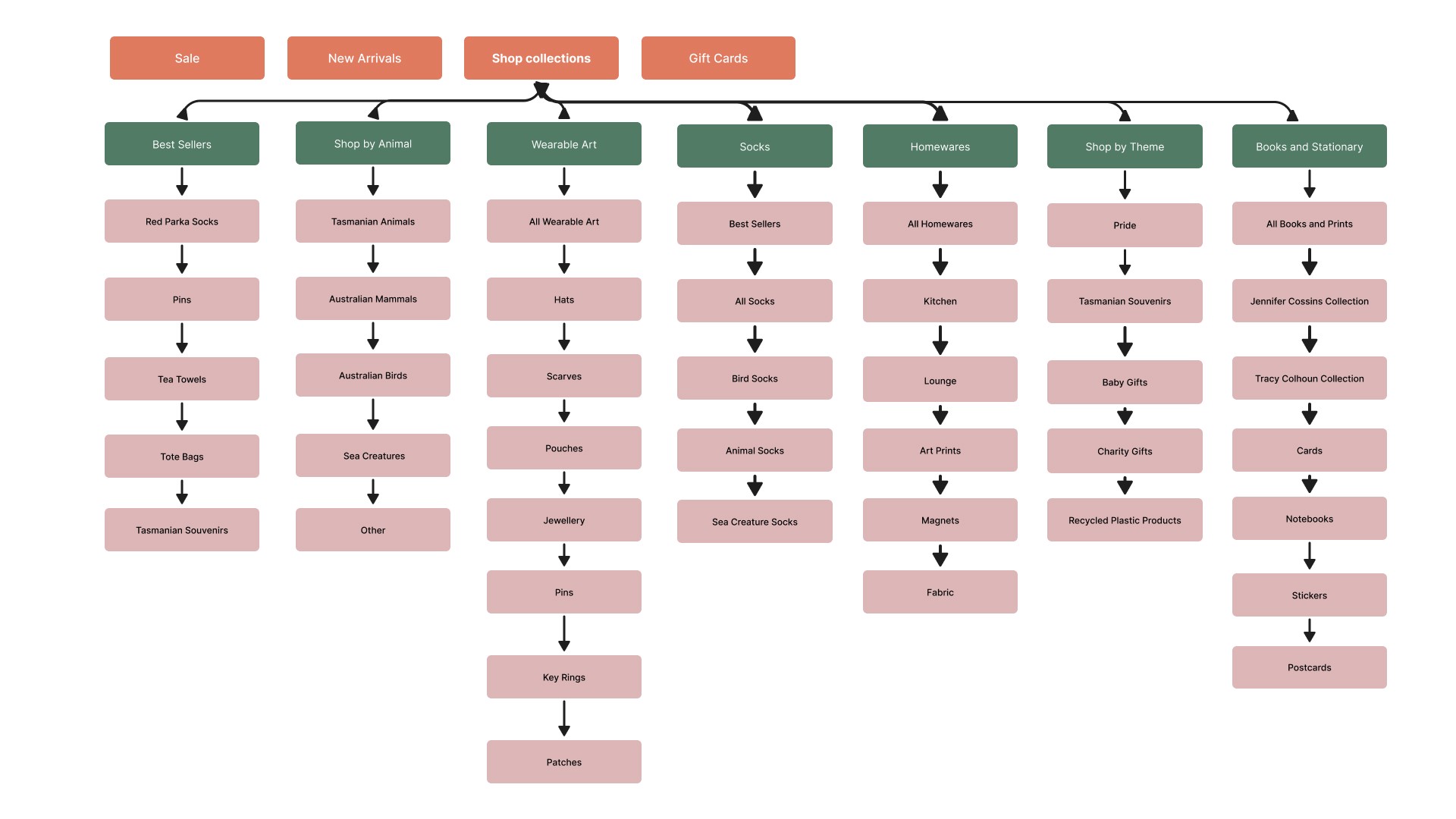
Before wireframes, the information architecture was rebuilt from the ground up with three requirements:
Category clarity — navigation logic that made sense to a first-time visitor, not just someone already familiar with the range. Frictionless user paths — pre-defined flows that guided browsers toward purchase with as few decision points as possible. And scalable structure — an architecture that could absorb a growing product range without breaking the experience.
Getting this right before moving into design was the decision that made everything downstream move faster.
UI/UX Design
The design direction was intentional: light, open, and welcoming. Consistent with the brand's environmental positioning without sacrificing commercial performance. Every visual decision was tested against the same question — does this move the user closer to purchase, or further away?
Specific solutions addressed the problems the research had surfaced. Prominent sale and featured product blocks reduced search time and surfaced the most commercially important items faster. Statement blocks communicating Red Parka's charitable purpose were introduced at key points in the journey — trust signals that also reinforced why someone would choose this brand over a competitor. The product page was restructured around best-practice e-commerce conventions. An additional shopping loop was introduced, increasing the average number of items purchased per visit.
The component system built into the design from the start solved the campaign page problem directly. New campaign pages became fast to assemble, consistently on-brand, and manageable without a designer involved in every update.
Platform & Build
Getting social from absent to consistently active required more than a style guide — it meant removing friction for the people responsible for posting. A Canva template system built for non-designers gave the marketing team the flexibility to cover different content types while keeping every output unmistakably on-brand. The result: 70% faster content production, no designer required in the loop.
Next Case Study

Branding
Website
Graphic